Home Renovation Planning Guide 2026: Budgeting & Priorities for Omaha Homeowners

Strategic renovation planning sets the foundation for a successful 2026 project. Photo: LongView Renovation.
January is the smartest time to plan a home renovation in Omaha. Contractors have open calendars, material suppliers are running winter promotions, and you have months of lead time before the busy spring season drives up demand. Whether you're considering a kitchen overhaul, a basement finish-out, or a full exterior transformation, this guide gives you the framework to budget accurately, prioritize wisely, and avoid the costly mistakes that derail Omaha renovation projects.
What You'll Learn:
- • Budget frameworks for $10K, $25K, $50K, and $100K+ renovation tiers
- • How to prioritize projects by ROI and lifestyle impact for Omaha homes
- • Omaha-specific cost factors: permits, climate, and material availability
- • Timeline planning to get your project completed before fall 2026
Why January Is the Best Time to Plan Your Renovation
Most Omaha homeowners wait until spring to start thinking about renovations, which means they're competing for contractor time with everyone else. By planning in January, you gain three distinct advantages:
Contractor Availability
January through February is the slowest season for Omaha contractors. You'll get faster responses, more detailed estimates, and first pick of spring scheduling slots.
Material Promotions
Suppliers clear winter inventory with discounts on cabinets, flooring, and fixtures. Ordering early also avoids spring supply chain backups.
Permit Lead Time
Douglas County permit offices process applications faster in winter. A 2-week turnaround in January becomes 4-6 weeks by April.
2026 Renovation Budget Framework for Omaha
Every renovation starts with an honest conversation about budget. Here's what each investment tier realistically buys in the 2026 Omaha market:
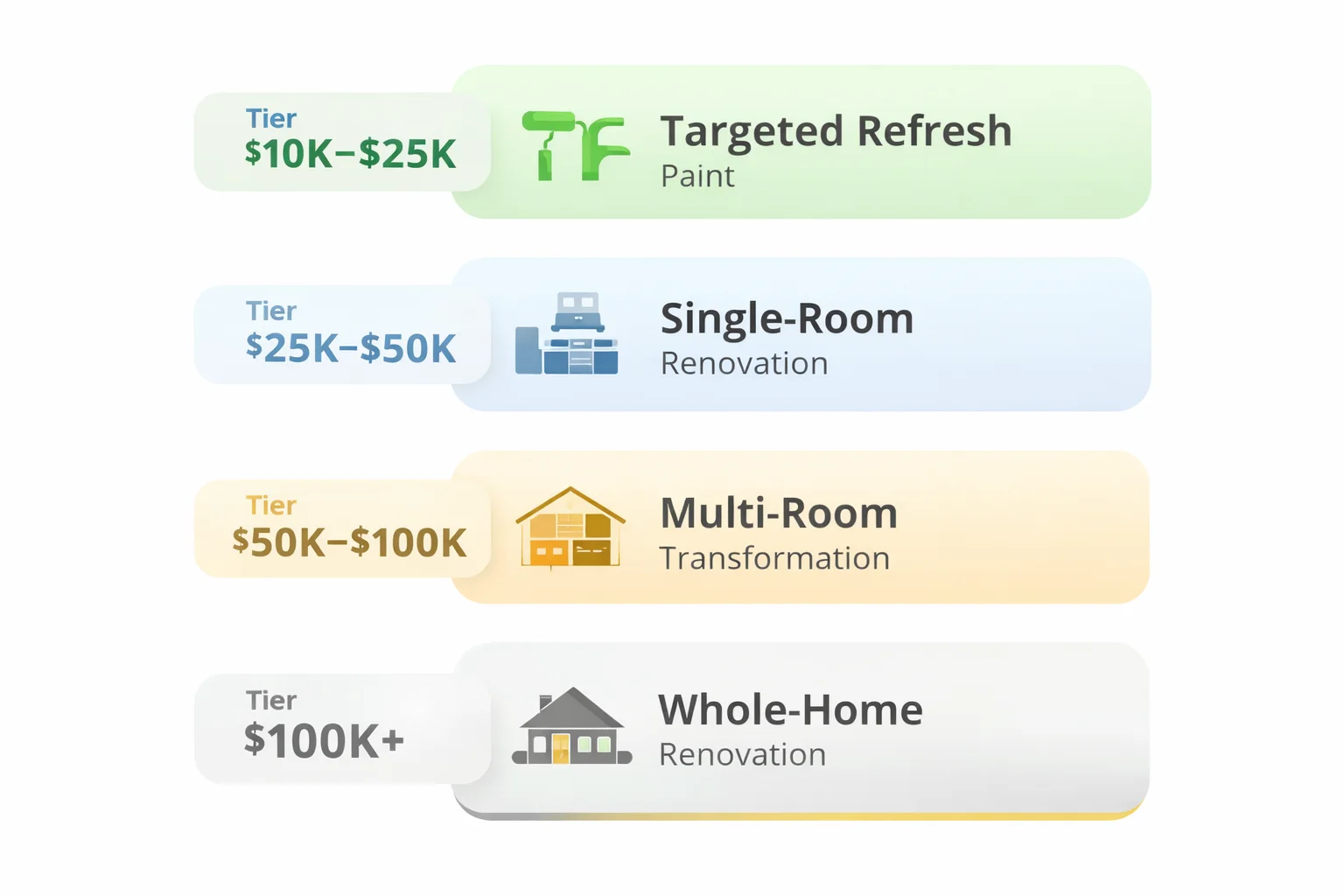
Four renovation investment tiers for Omaha homeowners in 2026.
Targeted Refresh
$10,000 - $25,000
Cosmetic updates that modernize without structural changes
- • Bathroom refresh (vanity, tile, fixtures)
- • Kitchen cabinet refacing + new countertops
- • Interior painting + flooring in 2-3 rooms
- • Entry door and hardware upgrade
Single-Room Renovation
$25,000 - $50,000
Full gut-and-rebuild of one major space
- • Complete kitchen remodel (mid-range finishes)
- • Full bathroom renovation with layout changes
- • Basement finish-out (500-700 sq ft)
- • Complete siding replacement (one material)
Multi-Room Transformation
$50,000 - $100,000
Comprehensive renovation touching multiple systems
- • Kitchen + bathroom combo renovation
- • Full basement buildout (800-1,200 sq ft)
- • Exterior overhaul (siding, roof, windows)
- • Open-concept conversion with structural work
Whole-Home Renovation
$100,000+
Major transformation or addition project
- • Full interior renovation (kitchen, baths, living)
- • Home addition (bedroom, sunroom, garage)
- • Complete interior + exterior overhaul
- • Luxury-grade finishes throughout
How to Prioritize Your Renovation Projects
Not all renovations deliver the same value at resale. The 2025 Cost vs. Value Report (Zonda Media) tracks cost recouped for common remodeling projects. National averages are cited below; Midwest region recoup typically trends lower and varies by metro area. Use this framework to decide what to tackle first:
High Cost Recouped + High Livability (Do First)
- Minor kitchen remodel: 112.9% cost recouped nationally (Midwest varies), daily quality-of-life impact
- Bathroom renovation (midrange): 65-75% cost recouped, essential functionality
- Fiber-cement siding: 113.7% cost recouped nationally (Midwest varies), curb appeal + weather protection
High Cost Recouped + Moderate Livability (Do Second)
- Entry door replacement (steel): 216.4% cost recouped nationally (Midwest varies), highest per-dollar return in the report
- Vinyl siding replacement: 97.2% cost recouped nationally, broad curb appeal improvement
- Garage door replacement: 267.7% cost recouped nationally (Midwest varies), top-ranked project in 2025 CVV
Moderate Cost Recouped + High Livability (Do When Budget Allows)
- Basement finish: Recently tracked in CVV, varies by market — massive living space gain
- Wood deck addition: Strong national recoup, seasonal outdoor living
- Open-concept conversion: Not tracked by CVV — varies by scope, significant lifestyle impact
ROI percentages reflect average cost-to-value recoup at time of resale and do not represent profit. Actual results vary by property condition, design quality, and local market timing.
Percentages from the Remodeling 2025 Cost vs. Value Report (Zonda Media). National averages; regional results vary.
Omaha-Specific Cost Factors for 2026
Permits and Regulations
Douglas County and the City of Omaha require permits for most renovation work beyond cosmetic changes:
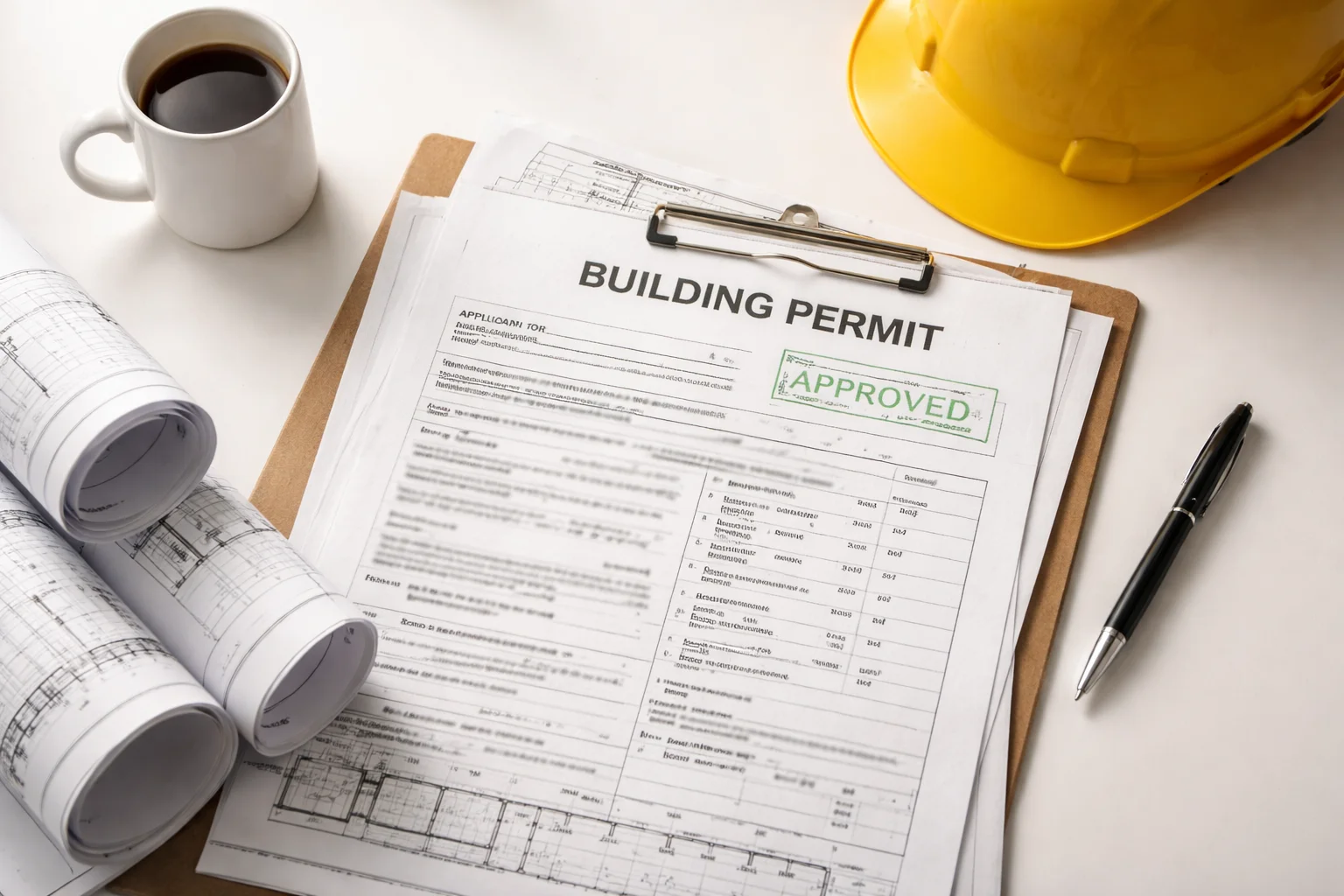
Securing building permits early avoids spring processing backlogs in Douglas County.
- Building permit: $50-$250 depending on project scope
- Electrical permit: $25-$100 (required for any new circuits)
- Plumbing permit: $35-$125 (required for fixture relocation)
- Processing time: 1-2 weeks in winter, 3-6 weeks in spring/summer
Climate Considerations
Omaha's extreme temperature swings (-10F to 105F) affect material choices and project scheduling:
- Exterior work window: April through November (concrete requires 40F+ for 72 hours)
- Interior work: Year-round, but material deliveries can be delayed by ice storms
- Insulation standards: Nebraska energy code requires R-49 attic, R-20 walls for new construction
- Moisture management: Basement waterproofing is almost always part of below-grade renovations
LongView Pro Tip
Start design consultations in January, finalize plans by March, and begin construction in April. This timeline gives you the best contractor rates, avoids permit backlogs, and puts you at the front of the spring construction queue. Projects planned this way typically finish 3-4 weeks earlier than those started in peak season.
2026 Renovation Timeline for Omaha
Here's a realistic month-by-month timeline to get your project completed before the holidays:
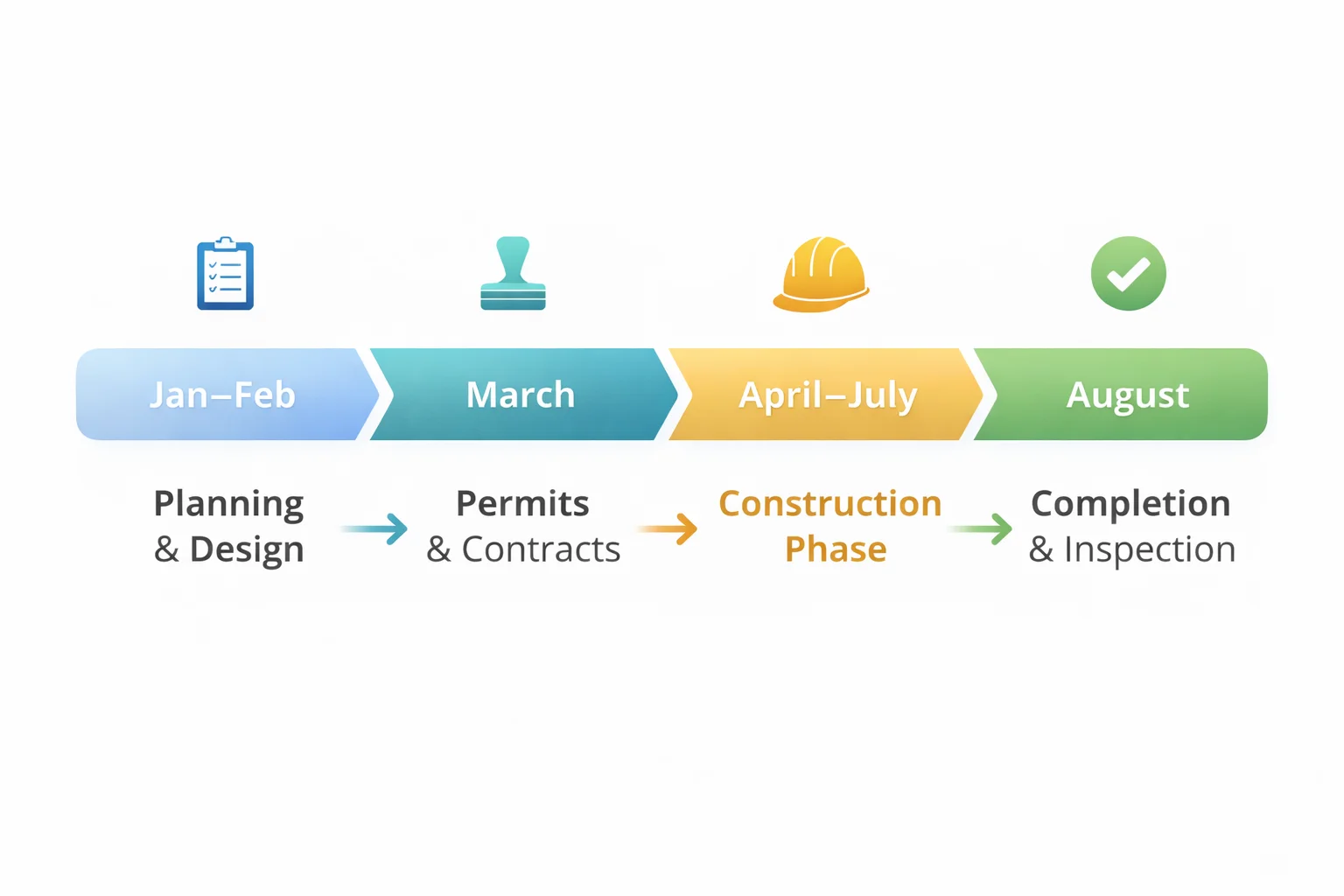
Plan early to complete your renovation before fall 2026.
Ideal 2026 Project Timeline:
- • January-February: Research contractors, get 3+ estimates, finalize budget
- • March: Select contractor, sign contract, submit permit applications
- • April: Permits approved, material orders placed, construction begins
- • May-July: Active construction phase (interior and/or exterior)
- • August: Punch list, final inspections, project completion
- • September-October: Enjoy your renovated home before winter
How to Vet an Omaha Renovation Contractor
The contractor you choose will determine the quality and experience of your entire renovation. Here's what to verify:
- Nebraska contractor license: Verify active status through the Nebraska Department of Labor
- Insurance: General liability ($1M minimum) and workers' compensation
- BBB rating: Check the Better Business Bureau for complaint history
- Local references: Ask for 3+ Omaha-area references from the past 12 months
- Written estimates: Detailed line-item quotes, not lump-sum guesses
- Warranty: Workmanship warranty of at least 1 year (LongView offers extended coverage)
Ready to Start Planning Your 2026 Renovation?
Free Consultation & Detailed Estimate
Get a personalized renovation plan and accurate cost estimate for your Omaha home. Our team helps you prioritize projects, maximize your budget, and build a timeline that works for your family.
Free Home Visit
We assess your space in person
Custom Plan
Prioritized project roadmap
Transparent Quote
Line-item cost breakdown
Make 2026 the Year You Transform Your Home
The difference between a renovation that stays on budget and one that spirals out of control is almost always the planning phase. By starting now, defining your priorities, and partnering with a trusted Omaha contractor, you can turn your vision into reality without the stress that comes from rushing into a project unprepared.
LongView Renovation has helped hundreds of Omaha families plan and execute home renovations that add lasting value. Whether your budget is $15,000 or $150,000, the process starts with a conversation about what matters most to your family.