Ice Dam Prevention & Roof Protection: Surviving Omaha's Harsh Winters
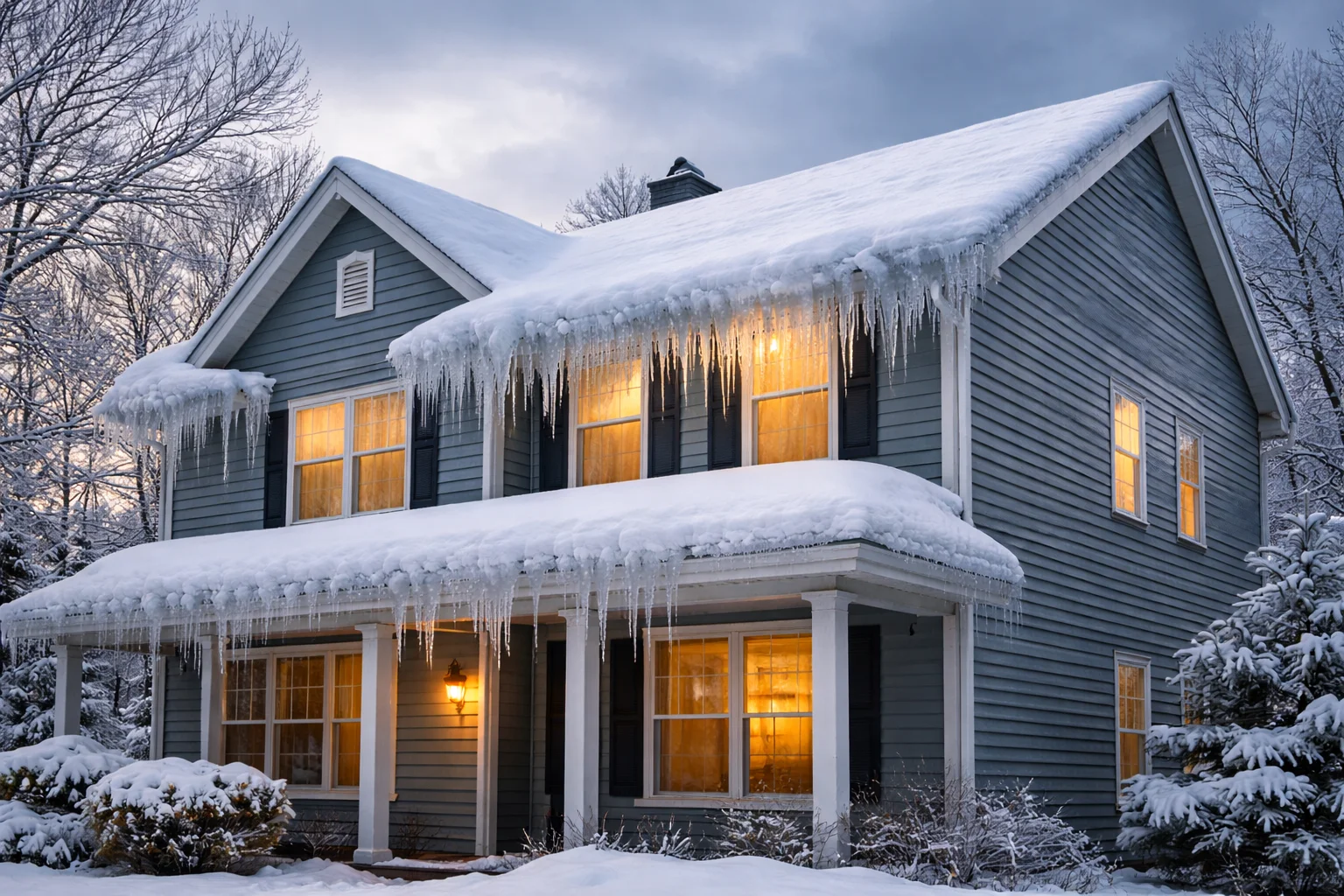
Ice dams form when heat escaping through the attic melts snow on the upper roof, which refreezes at the cold eaves. Photo: LongView Renovation.
Every winter, Omaha homeowners face a silent, destructive threat lurking on their rooftops. Ice dams -- those thick ridges of solid ice that form along the eaves of your roof -- are responsible for thousands of dollars in damage to Nebraska homes each year. The problem starts inside your attic, where escaping heat melts the snow on the upper portion of your roof. That meltwater flows downward until it reaches the unheated overhang at the eave, where it refreezes into a growing wall of ice. Behind that wall, trapped water has nowhere to go except under your shingles and into your home.
Omaha's climate makes ice dams particularly aggressive. Our winters cycle between deep freezes that plunge well below zero and brief thaws that push temperatures into the 40s -- sometimes within the same week. Each freeze-thaw cycle adds another layer to the ice dam, and each thaw sends another wave of meltwater searching for cracks in your roof's defenses. Understanding how ice dams form, recognizing the warning signs early, and implementing proven prevention strategies is the difference between a dry, damage-free winter and a costly emergency repair.
What You'll Learn:
- • How ice dams form on Omaha roofs and why Nebraska's freeze-thaw cycles accelerate the damage
- • Warning signs that indicate ice dam damage is already occurring inside your home
- • A complete prevention checklist covering insulation, ventilation, and air sealing
- • Safe removal methods vs. dangerous DIY approaches, and when to call a professional
How Ice Dams Form on Omaha Roofs
Ice dam formation follows a predictable cycle that begins inside your home, not on your roof. Here is the step-by-step process that turns a normal Omaha snowfall into a roofing emergency:
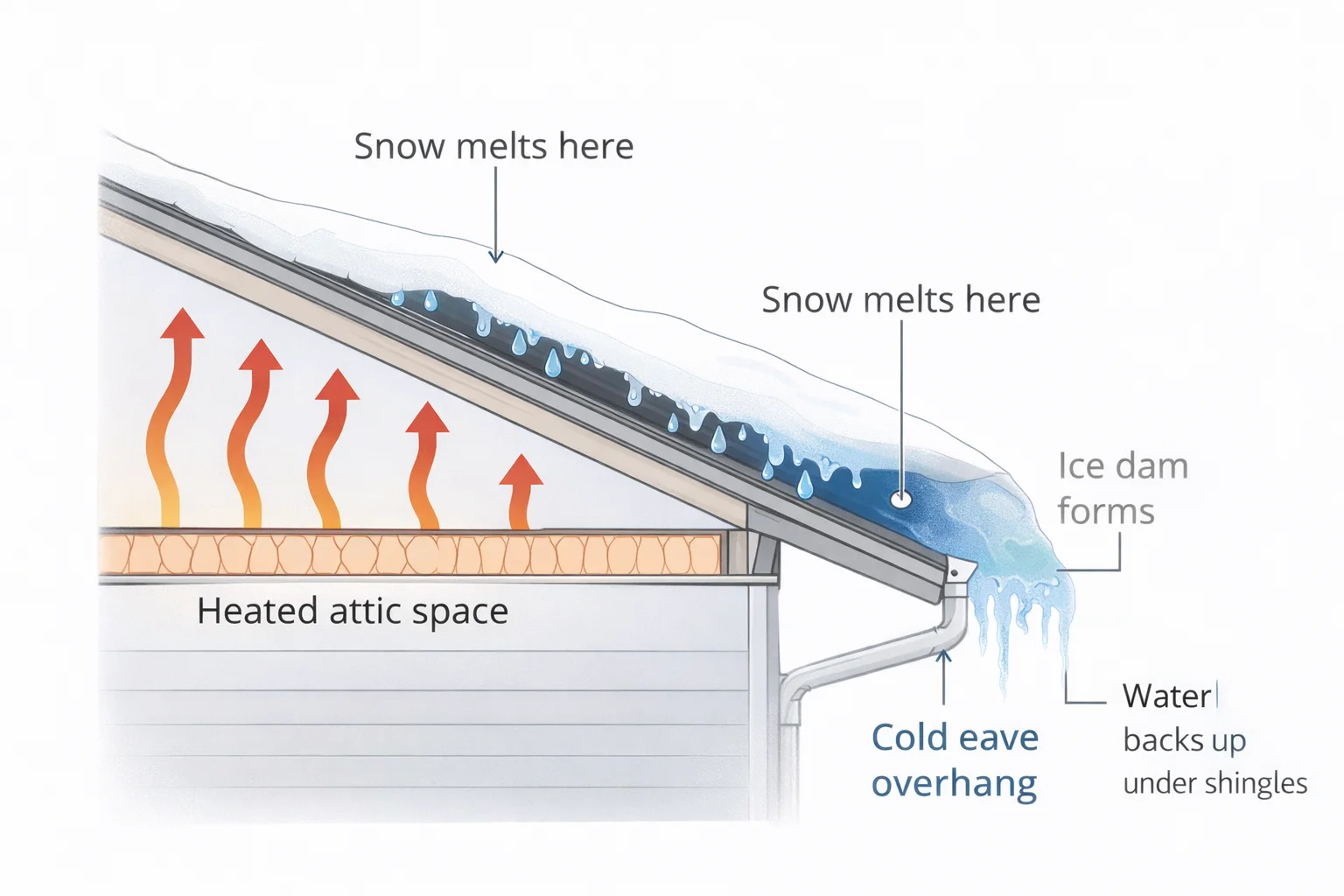
How ice dams form: heat escaping through the attic drives a melt-refreeze cycle at the eaves.
The Heat Loss Cycle
Your home generates heat constantly -- from your furnace, appliances, lighting, and even body heat. In a poorly insulated or poorly sealed attic, that warm air rises through gaps around light fixtures, plumbing penetrations, attic hatches, and recessed lights. The warm air heats the underside of your roof deck, raising the temperature of your shingles above freezing even when the outdoor air temperature is well below 32 degrees.
The Snowmelt-Refreeze Process
Once the upper roof surface warms above freezing, snow on that section begins to melt. The meltwater flows down the roof slope under the remaining snow cover. When it reaches the eave -- the portion of the roof that extends past your exterior walls -- the water hits a section of roof that is not warmed by attic heat. With outdoor temperatures below freezing, this water refreezes immediately, forming the initial ridge of ice.
Why Omaha's Climate Makes It Worse
The Omaha metro area averages 28 inches of snowfall per winter, with temperatures regularly swinging between single digits and the upper 30s within a matter of days. This rapid cycling means ice dams do not form once and stay static -- they grow, partially melt, and refreeze repeatedly. Each cycle drives the ice further up under the shingles and pushes trapped water deeper into the roof assembly. Homes in neighborhoods like Dundee, Benson, and Midtown with older construction and original attic insulation are especially vulnerable because their attic air sealing was never designed to meet modern thermal performance standards.
- Warm attic air heats the roof deck above the living space
- Snow melts on the heated upper roof and flows toward the eaves
- Meltwater refreezes at the cold overhang, forming the ice dam
- Trapped water pools behind the dam and backs up under shingles
- Water infiltrates the roof deck, insulation, walls, and ceilings
Warning Signs of Ice Dam Damage
Ice dam damage often starts invisibly, working its way into your home's structure before you notice any obvious problems. Knowing what to look for can save you thousands in repair costs by catching the issue early.
Exterior Warning Signs
- Large icicles at the eaves: While icicles alone do not always indicate an ice dam, clusters of large icicles forming along the entire eave line -- especially if ice is visible behind the gutter -- signal that meltwater is actively pooling and refreezing.
- Ice buildup behind gutters: Look for solid ice pushing up behind the gutter channel itself. This means the ice dam has grown large enough to block the gutter system entirely and is now forcing water upward toward the shingles.
- Uneven snow patterns: If your upper roof is bare while the eave area retains thick snow and ice, the upper roof is losing heat through the attic. This confirms the heat-loss cycle that drives ice dam formation.
- Soffit and fascia damage: Peeling paint, staining, or warped wood along the soffits and fascia boards indicates water has been working its way behind these trim components repeatedly.
Interior Warning Signs
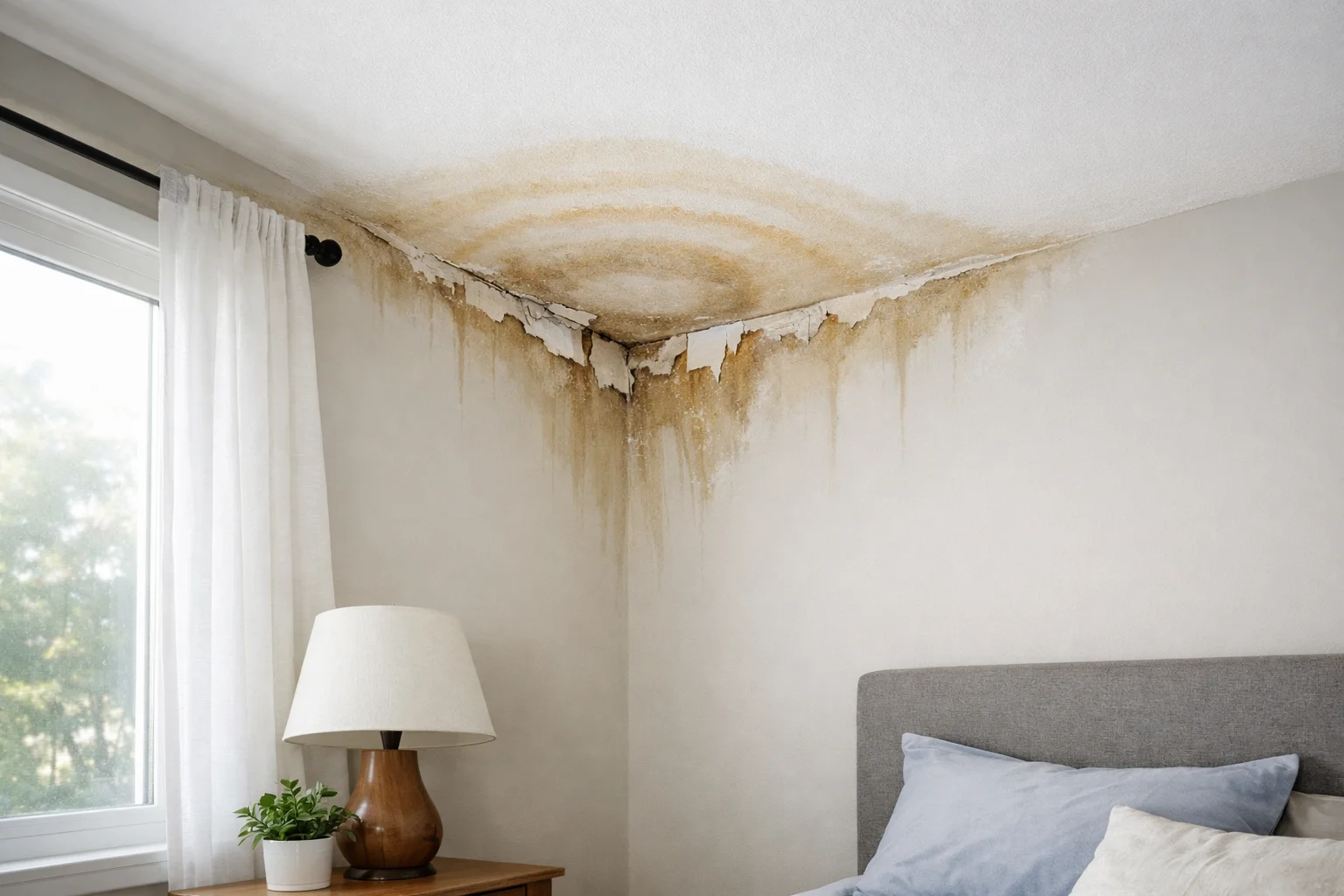
Interior water damage from ice dams often appears as ceiling stains and peeling paint near exterior walls.
- Water stains on ceilings: Brown or yellowish stains on ceilings near exterior walls, particularly in upstairs bedrooms, are the most common interior indicator of active ice dam leaking.
- Peeling paint near the roofline: Paint bubbling or peeling on walls or ceilings within 2-3 feet of exterior walls suggests moisture is migrating through the wall cavity from ice dam infiltration.
- Damp insulation in the attic: If you can safely access your attic, check the insulation near the eaves. Wet or compressed insulation confirms that water is breaching the roof assembly.
- Musty odors in upper rooms: Persistent musty smells in bedrooms or closets near the roofline can indicate hidden moisture and the early stages of mold growth from ice dam leaks.
Ice Dam Prevention Checklist
Preventing ice dams requires addressing the root cause: heat escaping into your attic. The following measures, ranked by impact, form a comprehensive prevention strategy for Omaha homes.
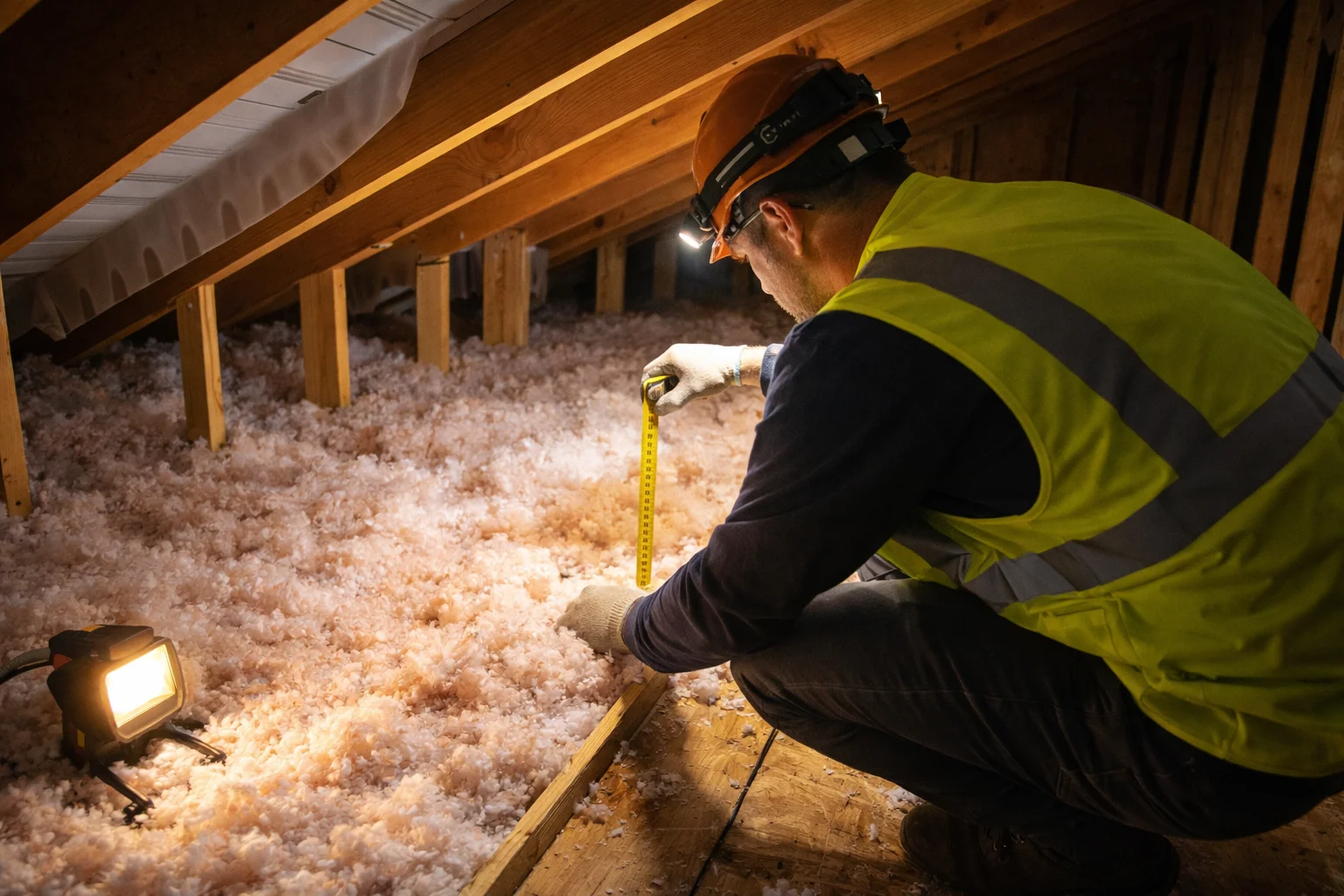
Inspecting attic insulation depth and air sealing is the first step in ice dam prevention.
1. Attic Insulation (R-49)
The single most impactful upgrade for ice dam prevention
- • Nebraska energy code requires R-49 for attic floors
- • Most Omaha homes built before 2000 have R-19 to R-30
- • Blown-in cellulose or fiberglass fills gaps better than batts
- • Typical cost: $1,500 - $3,500 for a standard Omaha home
2. Attic Ventilation
Keeps the roof deck cold by flushing warm attic air
- • Balanced system: soffit intake + ridge exhaust
- • 1 sq ft of net free area per 150 sq ft of attic floor
- • Ensure soffit vents are not blocked by insulation
- • Install baffles to maintain airflow channel at each rafter bay
3. Air Sealing
Stops warm air from reaching the attic in the first place
- • Seal around recessed lights, plumbing stacks, wiring holes
- • Caulk the top plates of interior walls where they meet the attic
- • Weatherstrip and insulate the attic hatch or pull-down stairs
- • Seal around HVAC ductwork and bathroom exhaust fan housings
4. Heat Cables & Gutter Care
Secondary measures that reduce ice accumulation
- • Self-regulating heat cables along eaves and in gutters
- • Clean gutters before the first freeze (November in Omaha)
- • Ensure downspouts drain away from the foundation
- • Heat cables are a symptom treatment, not a root cause fix
Emergency Ice Dam Removal
When an ice dam is actively leaking into your home, prevention is no longer an option -- you need safe, immediate removal. The method you choose matters enormously, because the wrong approach can cause more damage than the ice dam itself.
Safe Removal Methods
- Calcium chloride ice melt: Fill a leg from a pair of pantyhose with calcium chloride pellets and lay it perpendicular across the ice dam. The calcium chloride will slowly melt a channel through the dam, allowing trapped water to drain. This is the safest DIY method available.
- Professional steam removal: Specialized contractors use low-pressure steam equipment to melt the ice dam without damaging shingles. This is the gold standard for ice dam removal and is the method LongView Renovation recommends for active leaks.
- Roof raking: Using a roof rake from the ground, pull snow off the lower 3-4 feet of the roof after each snowfall. This removes the raw material that feeds ice dam growth. Only rake from the ground -- never climb onto an icy roof.
Dangerous Methods to Avoid
- Chipping or hacking at ice: Striking an ice dam with a hammer, chisel, or axe will crack or break shingles, damage flashing, and puncture the roof membrane. The repair costs from chipping damage routinely exceed the cost of professional steam removal.
- Rock salt or sodium chloride: Unlike calcium chloride, rock salt is corrosive to metal gutters, flashing, and fasteners. It also damages vegetation below the eaves when it washes off in spring.
- Pressure washers or hot water: High-pressure water drives moisture deeper into the roof assembly and can strip the granule surface from asphalt shingles. Hot water creates rapid thermal shock that cracks shingles in freezing temperatures.
- Climbing onto an icy roof: This is the most dangerous mistake homeowners make. Icy roofs cause falls that result in serious injuries every winter in the Omaha metro. Never climb onto a roof with ice or snow present.
When Ice Dam Damage Requires Professional Repair
Some ice dam damage is superficial and resolves once the ice melts. Other damage compromises the structural integrity of your roof system and requires professional intervention. Here is how to determine which category your situation falls into.
Shingle and Underlayment Damage
Ice dams lift shingles from the roof deck as the ice expands and contracts. Once shingles are lifted, the seal strip that bonds one shingle to the next breaks permanently. Even after the ice melts, those shingles will not reseal -- they become vulnerable to wind uplift and rain penetration for the remaining life of the roof. If you can see shingle tabs that are visibly raised, curled at the edges, or missing entirely along the eave line after ice dam season, professional repair or replacement of those courses is necessary.
More critically, ice dams can compromise the ice-and-water shield underlayment. Modern building codes require this self-adhering membrane to extend at least 24 inches past the interior wall line, but many older Omaha homes were built with felt paper alone. If the underlayment is breached, water enters the roof deck directly, leading to wood rot, mold, and structural deterioration that is invisible from the ground.
Interior Water Damage
Water that enters through the roof does not simply stain a ceiling and stop. It migrates through insulation (destroying its thermal performance), saturates drywall (which loses structural integrity when wet), and pools on vapor barriers where it creates ideal conditions for mold growth. If you have experienced interior water intrusion from an ice dam, a professional assessment should include:
- Moisture meter readings of the attic decking, rafters, and wall cavities
- Insulation inspection to determine if saturated sections need replacement
- Mold testing if water intrusion persisted for more than 48 hours
- Structural assessment of the roof deck for soft spots or delamination
Insurance Coverage for Ice Dam Damage in Nebraska
Ice dam damage falls into a gray area for many homeowner's insurance policies, and understanding what is covered before you file a claim can save you significant frustration.
What Is Typically Covered
Most standard HO-3 homeowner's policies in Nebraska cover sudden and accidental water damage caused by ice dams. This generally includes:
- Interior water damage: Ceiling stains, drywall replacement, damaged flooring, and ruined personal property caused by ice dam leaks
- Emergency removal costs: Professional ice dam removal when the dam is actively causing damage to the structure
- Mold remediation: If mold develops as a direct result of a covered ice dam event (subject to policy mold sub-limits)
What Is Typically Not Covered
- The roof itself: Most policies consider ice dam damage to shingles as a maintenance issue, not a covered peril. Replacing shingles damaged by ice dams typically comes out of pocket.
- Gradual damage: If ice dams have been causing slow damage over multiple winters and you did not address the issue, insurers may deny the claim as deferred maintenance.
- Prevention measures: Adding insulation, ventilation, or heat cables is considered home improvement, not a covered repair.
Documentation Tips for Filing a Claim
- Photograph immediately: Document the ice dam from outside and all interior damage before making any repairs
- Record dates: Note the date you first observed the ice dam and the date water intrusion began
- Get a professional assessment: An inspection report from a licensed contractor carries significant weight with adjusters
- Save all receipts: Keep receipts for emergency repairs, temporary tarps, fans, and dehumidifiers
- Do not delay: Nebraska requires timely reporting; file your claim as soon as you discover damage
LongView Pro Tip
Attic air sealing is the #1 ice dam prevention measure -- more effective than adding insulation alone. In our experience inspecting Omaha attics, the majority of heat loss driving ice dams comes from unsealed penetrations, not insufficient insulation depth. A professional air sealing job targets the gaps around recessed lights, plumbing vents, wiring holes, and top plates that allow warm air to bypass even thick insulation. Combining air sealing with R-49 insulation and balanced ventilation virtually eliminates ice dam formation on Omaha homes.
Protect Your Roof Before the Next Freeze
Free Winter Roof Inspection & Damage Assessment
Do not wait for water stains on your ceiling to take action. Our team inspects your roof, attic, and ventilation system to identify ice dam risk factors and existing damage -- then provides a clear, prioritized repair plan.
Free Roof Inspection
We assess your roof, attic, and ventilation
Damage Assessment
Detailed report of findings and risk areas
Repair Plan
Prioritized solutions with transparent pricing
Stay Ahead of Winter Roof Damage
Ice dams are not an inevitable consequence of Omaha winters -- they are a solvable problem with a clear cause and proven solutions. The homeowners who avoid ice dam damage year after year are the ones who invest in proper attic air sealing, maintain R-49 insulation, and ensure their roof ventilation system is balanced and unobstructed. These upgrades pay for themselves many times over, not only in avoided repair costs but in lower heating bills and improved comfort throughout the winter months.
If you have already noticed the warning signs -- icicles forming along your eaves, water stains appearing on upstairs ceilings, or ice pushing up behind your gutters -- do not wait for spring. The damage compounds with every freeze-thaw cycle, and early intervention can prevent a manageable repair from becoming a major restoration project. LongView Renovation provides free winter roof inspections for Omaha homeowners, including attic assessment and a detailed report of any ice dam risk factors we identify.