Siding Repair vs. Replacement: How to Know When It's Time in Omaha
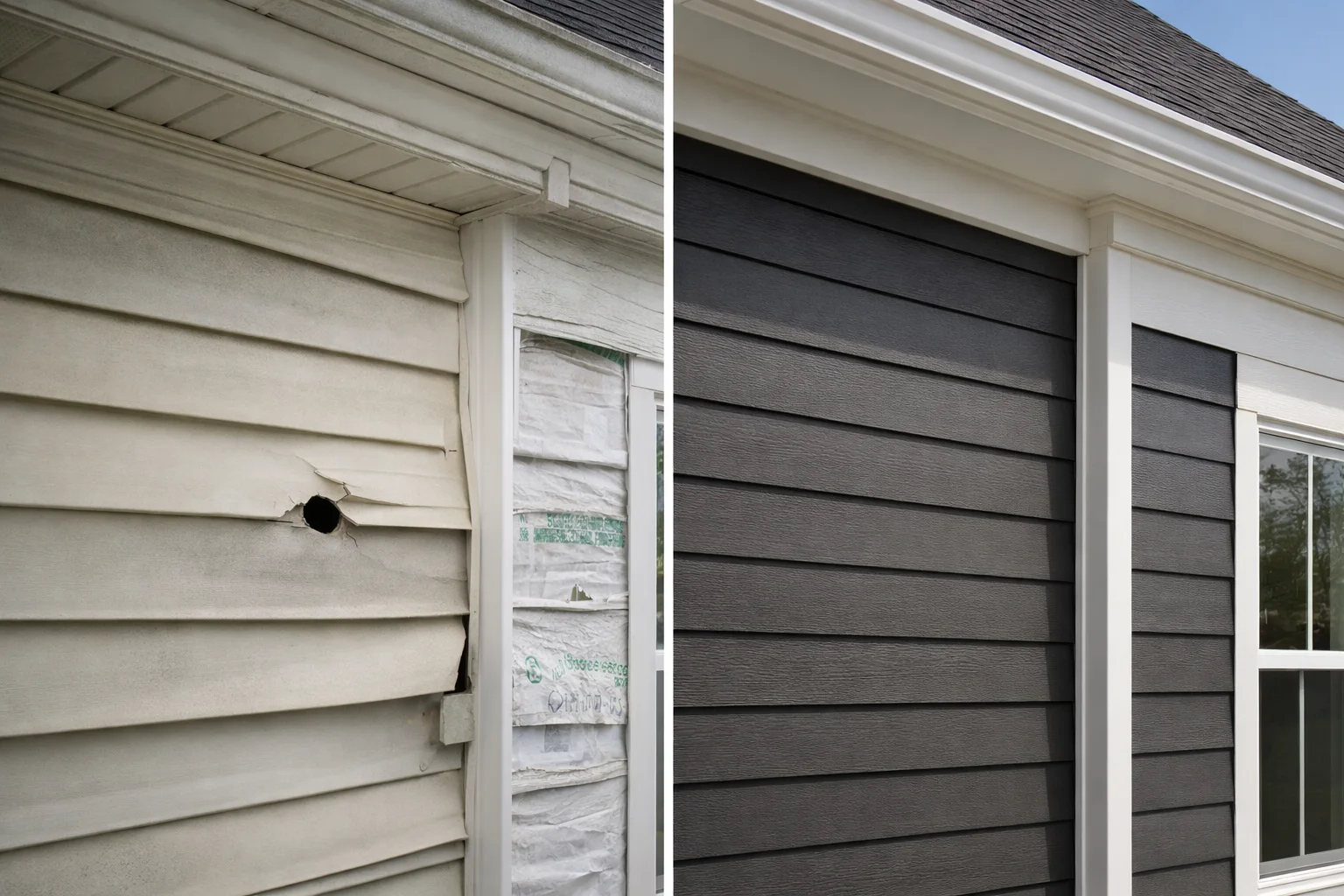
Knowing when to repair versus replace your siding can save thousands and protect your home's structure. Photo: LongView Renovation.
Omaha's climate is relentless on exterior siding. Summer hailstorms drive ice at highway speeds into vinyl and wood panels. Winter freeze-thaw cycles push moisture into hairline cracks that widen each season. UV exposure bleaches color and breaks down protective coatings over years of 95-degree July afternoons. When you walk outside and notice warping, cracks, or faded patches across your siding, the question is immediate: do you patch what you can, or is it time for a full replacement?
The answer depends on more than appearances. The age of your siding, the extent of damage, what's happening behind the panels, and your plans for the home all factor into a decision that can range from a $500 repair to a $30,000 investment. This guide walks you through a systematic assessment so you can make the right call for your Omaha home, your budget, and your long-term property value.
What You'll Learn:
- • How to assess siding damage and identify the warning signs that demand attention
- • Clear criteria for when repair is sufficient vs. when replacement is the smarter investment
- • Side-by-side comparison of siding materials suited for Omaha's extreme climate
- • Cost breakdowns for repairs, partial re-siding, and full replacement in the Omaha market
Signs Your Siding Needs Attention
Not every blemish on your siding means trouble, but certain signs indicate real problems that will worsen without intervention. Here's what to look for during a walk-around inspection of your Omaha home:
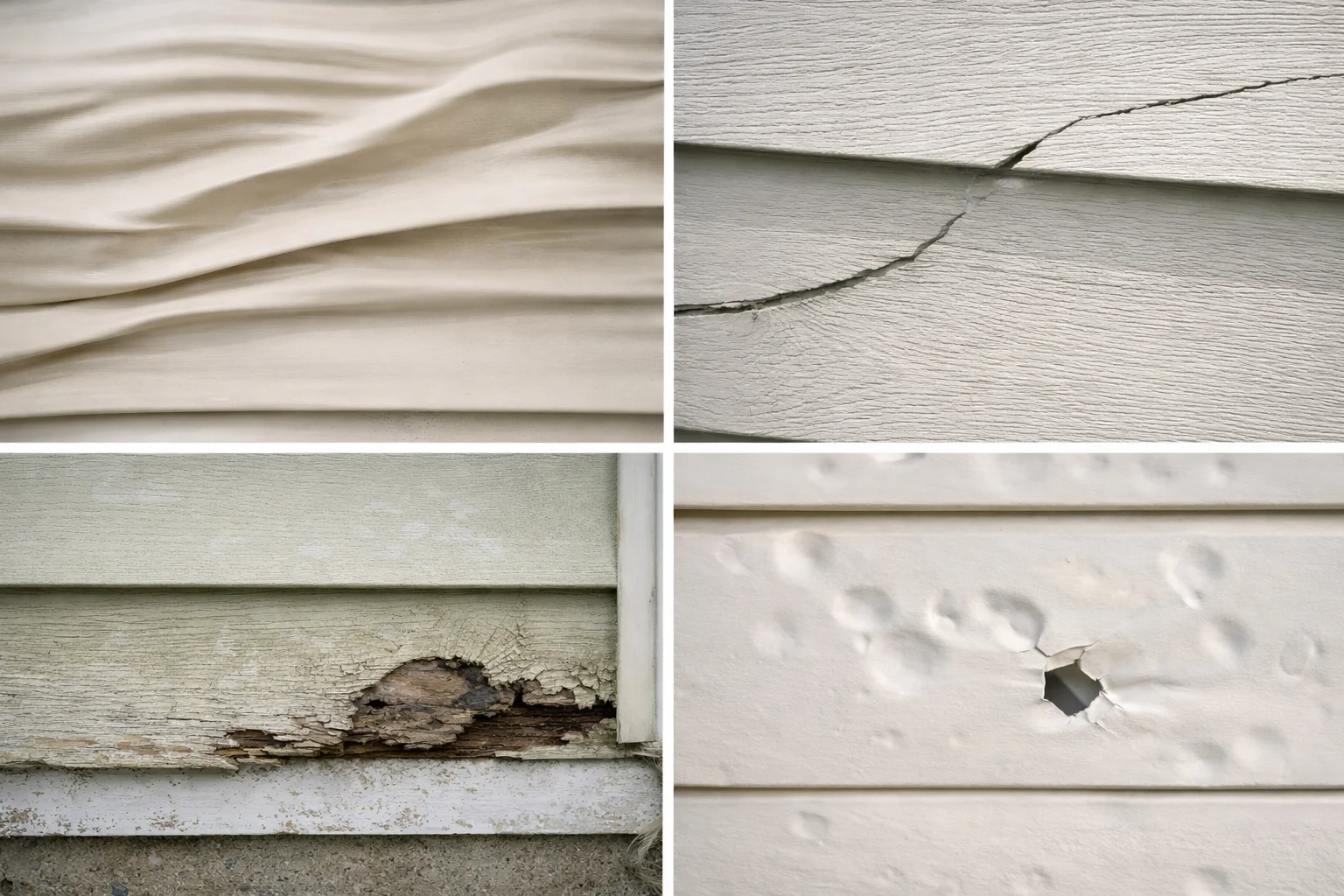
Common siding damage types found on Omaha homes after years of Nebraska weather exposure.
Warping & Buckling
Panels that bow outward or wave along their length indicate heat damage, improper installation, or moisture trapped behind the siding. In Omaha, this often results from south-facing walls absorbing extreme summer heat against dark-colored panels. Warped siding no longer creates a sealed barrier and allows wind-driven rain to penetrate.
Cracking & Splitting
Cracks are the most common form of siding failure in Nebraska. Freeze-thaw cycles expand moisture inside micro-fractures until the panel splits. Hail impact creates immediate cracks in vinyl and fiber cement. Even small cracks compromise weather resistance and allow insect infiltration.
Moisture Intrusion
Soft spots when you press against the wall, visible mold or mildew growth, peeling interior paint, or musty odors near exterior walls all signal moisture behind your siding. This is the most urgent warning sign because water damage to sheathing, insulation, and framing compounds rapidly and drives up repair costs.
Fading & Chalking
Run your hand across the siding. If it leaves a powdery residue, the protective finish has broken down. Significant fading, especially uneven fading across different walls, means the UV protection is gone and the material is degrading. While cosmetic at first, advanced chalking accelerates material breakdown.
Loose or missing panels are obvious red flags that leave your home's structure exposed to the elements. After any major storm in Omaha, walk the perimeter and check for panels that have shifted, popped free, or gone missing entirely. Additionally, increasing energy bills with no other explanation may indicate your siding is no longer providing effective insulation or air sealing, allowing conditioned air to escape through gaps and cracks in the building envelope.
When Repair Makes Sense
Repair is the right move when the damage is limited, your siding still has useful life remaining, and the underlying structure is sound. Specifically, repair is likely your best option when:
- Isolated damage from a single event: A hailstorm cracked a few panels on one wall, or a fallen branch punched through a small section. When the cause is identifiable and the damage is contained, targeted repair addresses the problem without unnecessary expense.
- Less than 20% of the surface is affected: If damage covers a small portion of your total siding area, replacement costs far outweigh the scope of the problem. A skilled contractor can patch, replace individual panels, and blend the repair with your existing siding.
- Siding is less than 15 years old: Most siding materials have decades of life. If yours was installed within the last 15 years and the damage is localized, you're discarding significant remaining value by replacing the entire system.
- Matching materials are still available: This is a practical consideration that many homeowners overlook. If your exact siding profile, color, and manufacturer are still in production, repairs will blend seamlessly. Once a product is discontinued, even good repairs look like patches.
- Budget constraints require phasing: Sometimes the finances dictate the timeline. A well-executed repair buys you time to plan and save for a full replacement down the road, as long as moisture isn't actively damaging your walls.
When Replacement Is the Better Investment
There's a tipping point where continued repairs become more expensive than replacing the siding altogether. Replacement is the smarter financial decision when:
- Widespread damage exceeds 30% of the surface: Once damage covers a third or more of your home's exterior, the labor and material costs for piecemeal repairs approach full replacement pricing, but you get inferior results. Replacement gives you a uniform appearance and a complete warranty.
- Siding is over 20 years old: Vinyl siding installed in the early 2000s used thinner gauges and less UV-resistant formulations than modern products. Wood siding from the same era has likely been through hundreds of freeze-thaw cycles. At 20+ years, the material itself is the problem, and new damage will keep appearing.
- You're stuck in a recurring repair pattern: If you've repaired the same wall twice in three years, or you're calling a contractor after every major storm, the cumulative repair costs are telling you the siding has exceeded its service life. Track your repair spending, because it adds up faster than most homeowners realize.
- Moisture has penetrated behind the panels: This is the most critical factor. If an inspection reveals wet sheathing, mold on the house wrap, or compromised insulation, the siding has already failed at its primary job. Replacement allows you to address the underlying damage, install modern moisture barriers, and prevent structural rot.
- You want a significant energy efficiency upgrade: Modern insulated siding systems, combined with updated house wrap and air barriers, can reduce heating and cooling costs by 10-20%. If your home feels drafty or your energy bills seem excessive, new siding is an opportunity to tighten the building envelope.
- You plan to sell within 2-3 years: New siding is one of the highest-return exterior projects. The 2025 Cost vs. Value Report (Zonda Media) shows fiber-cement siding recouping approximately 113.7% and vinyl siding approximately 97.2% nationally (Midwest results vary by metro area). Buyers notice curb appeal instantly, and home inspectors flag deteriorating siding, which can kill deals or force price reductions.
Siding Material Comparison for Omaha Climate
If you decide on replacement, selecting the right material for Omaha's climate is the single most important decision. Each option offers different trade-offs between cost, durability, maintenance, and weather resistance:
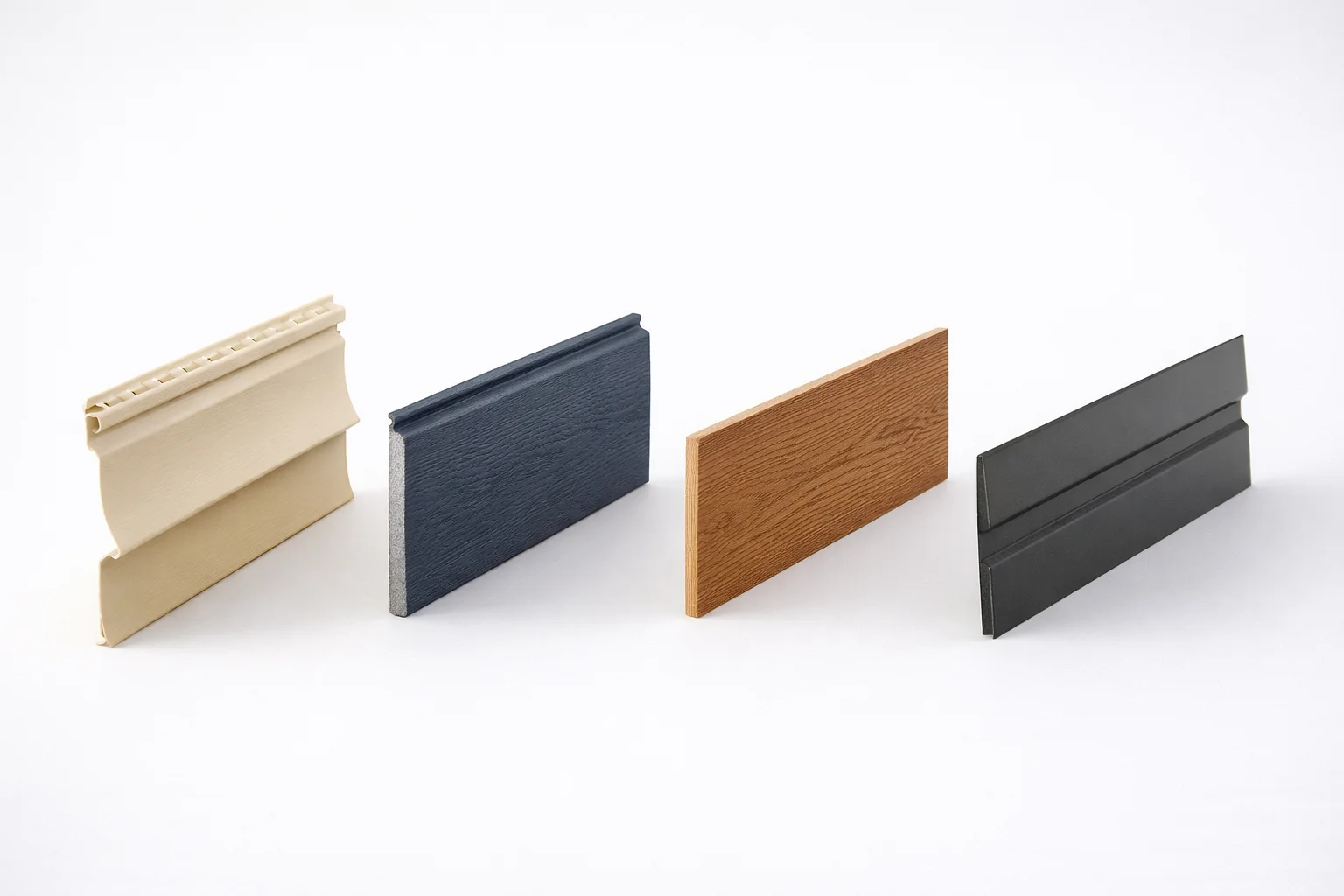
Siding material comparison for Omaha's extreme climate: cost, lifespan, and hail resistance at a glance.
Vinyl Siding
$4 - $8 / sq ft installed
Most popular choice for Omaha homes
- • Lifespan: 20-30 years
- • Maintenance: Low (occasional power washing)
- • Hail resistance: Moderate, can crack in severe storms
- • Best for: Budget-conscious homeowners who want variety in color and style
- • Omaha note: Choose thicker gauge (0.044"+) for better hail resistance
Fiber Cement (James Hardie)
$8 - $14 / sq ft installed
Premium durability, Omaha's fastest-growing choice
- • Lifespan: 30-50 years
- • Maintenance: Repaint every 15-20 years
- • Hail resistance: Excellent, resists impact and cracking
- • Best for: Homeowners who want long-term value and superior weather protection
- • Omaha note: James Hardie HZ5 zone-specific product designed for freeze-thaw climates
Engineered Wood (LP SmartSide)
$6 - $10 / sq ft installed
Authentic wood aesthetic with engineered performance
- • Lifespan: 20-30 years
- • Maintenance: Repaint every 10-15 years, keep sealed
- • Hail resistance: Good, absorbs impact better than vinyl
- • Best for: Craftsman, farmhouse, and traditional style homes
- • Omaha note: Treated with SmartGuard for moisture and termite resistance in humid summers
Metal / Steel Siding
$7 - $12 / sq ft installed
Maximum durability and modern curb appeal
- • Lifespan: 40+ years
- • Maintenance: Virtually none (no painting, no rot)
- • Hail resistance: Superior, dents but does not crack or break
- • Best for: Homeowners who want zero maintenance and contemporary style
- • Omaha note: Growing in popularity for accent walls and full-home modern builds
Cost Breakdown: Repair vs. Full Re-Side in Omaha
Understanding the real cost differences helps you evaluate options objectively. These figures reflect 2026 pricing in the greater Omaha metro area:
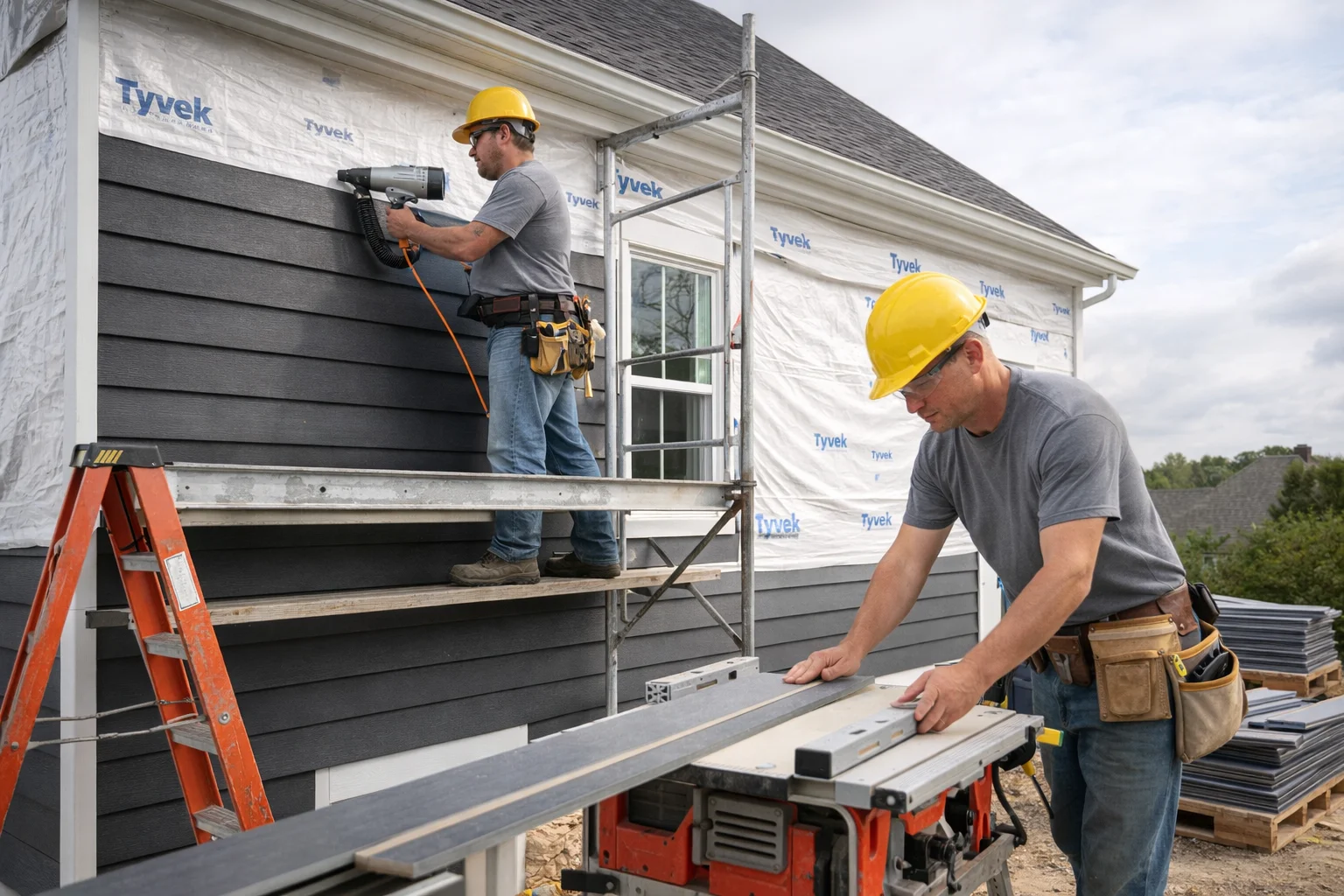
Full siding replacement includes house wrap, insulation, and new panels for complete weather protection.
Spot Repair
- Cost range: $500 - $3,000
- Scope: Replacing 5-20 individual panels, patching small areas, re-caulking and sealing
- Timeline: 1-2 days
- Best for: Storm damage to one wall, isolated cracking, a few missing panels
Partial Re-Side
- Cost range: $3,000 - $8,000
- Scope: Replacing one or two full walls, often combined with house wrap and insulation upgrade on affected areas
- Timeline: 2-5 days
- Best for: One side of the home took severe hail damage, or aging on sun-exposed walls while shaded walls are still sound
Full Replacement
- Cost range: $12,000 - $30,000 for an average Omaha home (1,500-2,500 sq ft)
- Scope: Complete tear-off, sheathing inspection and repair, new house wrap/moisture barrier, full siding installation, trim and soffit work
- Timeline: 1-3 weeks depending on material and home size
- Best for: Siding over 20 years old, widespread damage, energy efficiency upgrade, pre-sale curb appeal investment
Energy Efficiency Gains from Modern Siding
New siding is more than a cosmetic upgrade. Modern siding systems create a tighter building envelope that directly reduces your heating and cooling costs, which is significant in a climate like Omaha's where you're running furnaces through subzero winters and air conditioning through 100-degree summers.
- Insulated vinyl siding includes a contoured foam backing that fills the gap between the siding panel and the wall sheathing, eliminating thermal bridging and adding R-2 to R-5 of insulation value across the entire wall surface.
- Modern house wrap (Tyvek, ZIP System) installed during a re-side creates a continuous air and moisture barrier that older homes lack. Many Omaha homes built before 2000 have no house wrap at all.
- Air barrier improvements from sealing around windows, doors, and penetrations during siding replacement can reduce air infiltration by 20-40%, according to Department of Energy estimates.
- Typical energy savings: Homeowners who upgrade from old, uninsulated siding to a modern insulated system report 10-20% reductions in annual heating and cooling costs. For an Omaha home averaging $200/month in utility bills, that represents $240-$480 in annual savings that compounds over the life of the siding.
Insurance Coverage for Storm-Damaged Siding
Omaha averages multiple significant hailstorms each year, and siding damage is one of the most common homeowner insurance claims in Nebraska. Understanding the claims process can make the difference between paying out of pocket and having your insurance cover most of the cost:
- Document damage immediately: Photograph all damaged areas with close-up and wide-angle shots before any temporary repairs. Note the date, time, and weather event that caused the damage. This documentation is your evidence.
- File promptly: Most policies require claims within 60-90 days of the damage event. Waiting too long can result in denial. Call your insurer and request an adjuster visit.
- Understand depreciation: Actual Cash Value (ACV) policies deduct depreciation based on siding age, meaning 15-year-old siding pays out less than 5-year-old siding for the same damage. Replacement Cost Value (RCV) policies cover the full cost of new siding regardless of age, though you typically pay the depreciation amount upfront and receive it back after repairs are completed.
- Get a professional estimate first: Having a detailed contractor estimate before the adjuster arrives gives you leverage. Adjusters sometimes underestimate scope, and a professional damage assessment ensures nothing is missed.
- Working with adjusters: Your contractor should be present during the adjuster's inspection when possible. Experienced siding contractors know how to identify damage patterns that adjusters may overlook, particularly on the upper stories and areas not visible from ground level.
LongView Pro Tip
Always get a professional moisture inspection before deciding between repair and replacement. Surface damage is what you see, but moisture damage behind the siding is what destroys your home. A qualified contractor uses moisture meters and thermal imaging to check for trapped water, saturated sheathing, and hidden mold. If moisture is present behind even a small section of siding, it changes the entire calculation. What looks like a $1,500 repair job can turn into a $15,000 structural problem if the underlying damage goes undetected. At LongView Renovation, every siding assessment includes a moisture check at no additional charge.
Not Sure If You Need Repair or Replacement?
Free Siding Inspection & Honest Assessment
Get a clear, no-pressure answer from our siding specialists. We inspect the damage, check for moisture behind the panels, and give you a written recommendation with transparent pricing for both repair and replacement options.
Free Siding Inspection
Visual + moisture meter assessment
Damage Report
Detailed findings with photos
Detailed Quote
Repair and replacement options
Making the Right Decision for Your Home
The repair vs. replacement decision comes down to three factors: the extent of current damage, the age and condition of your existing siding, and whether moisture has compromised the structure behind it. If damage is localized, your siding is relatively young, and the structure is dry, repair is the practical choice. If damage is widespread, your siding has passed the 20-year mark, or there's any sign of moisture intrusion, replacement protects your home and your investment for decades to come.
In Omaha's climate, siding isn't just an aesthetic feature. It's the primary barrier between your home's structure and some of the most extreme weather conditions in the country. Whether you need a targeted repair after a spring hailstorm or a full re-side that upgrades your home's energy efficiency and curb appeal, the process starts with an honest inspection and a contractor who will tell you what you actually need rather than what generates the highest invoice.
LongView Renovation has helped hundreds of Omaha homeowners navigate this exact decision. We inspect, we explain, and we give you options with transparent pricing so you can choose the path that makes sense for your home and your budget.