Roofing Types

Cedar Shake & Wood Shake Roofing

Expert inspection, repair, and replacement consultation for aging cedar shake roofs in Omaha. We assess condition, document damage, and help you evaluate the best path forward.

Free

Roof Evaluations

Fast

Storm Response

Omaha Metro

Service Area

What Is Cedar Shake Roofing?
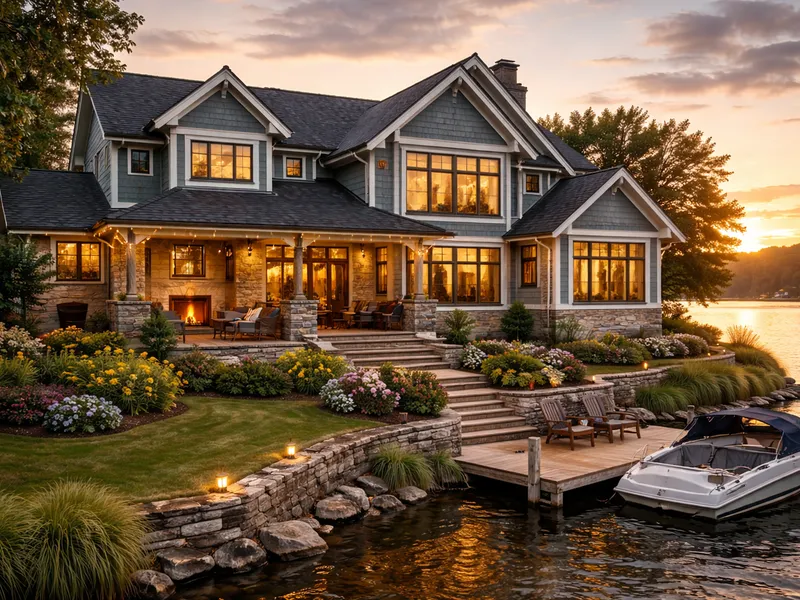
Elegant upscale Omaha home with weathered silver-gray cedar shake roof

Cedar shake roofing uses hand-split or machine-cut Western Red Cedar to create a distinctive, natural-looking roof. Common on older upscale homes throughout Omaha's Dundee, Happy Hollow, and Fairacres neighborhoods, cedar shake was a popular premium roofing choice for decades.

Cedar shakes weather naturally to a silver-gray patina over time. With proper maintenance, a cedar shake roof can last 20–30 years. However, as these roofs age, they become increasingly susceptible to moisture damage, moss growth, and structural deterioration — especially in Nebraska's freeze-thaw climate.
Common Problems With Aging Cedar Shake

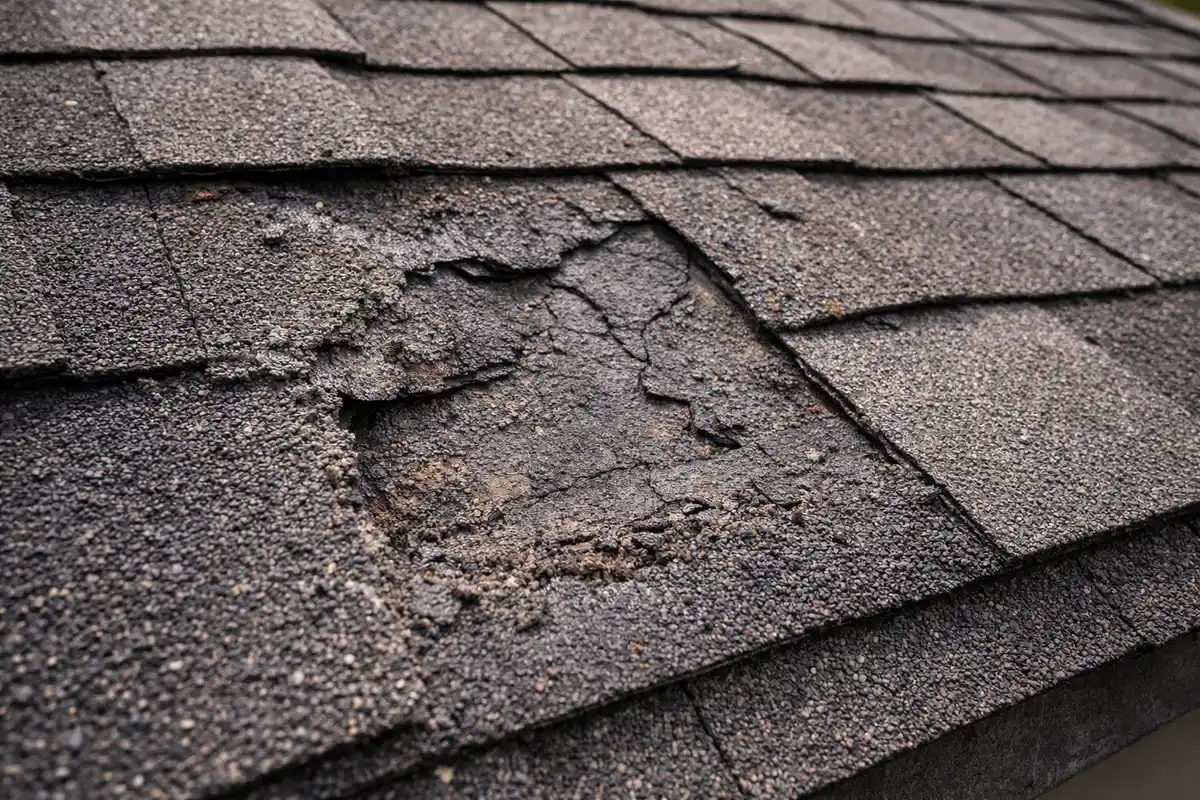
As cedar shake roofs age past their prime, several common issues emerge that compromise performance and protection.

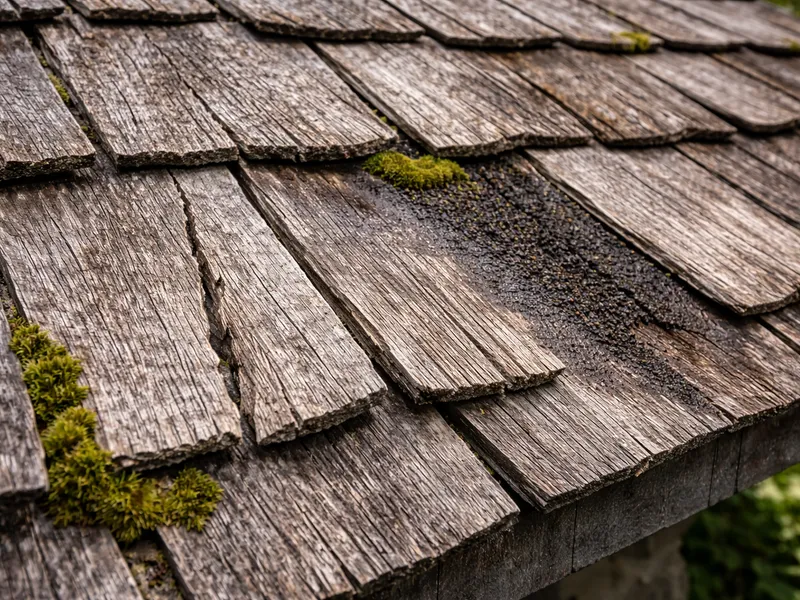
Close-up of aging cedar shake roof showing cupping, splitting, and moss growth

Rot & Moisture Damage

Cedar absorbs moisture over time, leading to soft spots, warping, and decay. Nebraska's freeze-thaw cycles accelerate this process as trapped moisture expands and contracts within the wood grain.

Moss & Algae Growth

Shaded areas of cedar shake roofs develop moss, lichen, and algae that retain moisture against the wood surface. Left untreated, biological growth accelerates rot and can compromise the waterproof integrity of the roof.

Cupping & Splitting

As cedar ages and dries, individual shakes curl upward at the edges (cupping) or crack along the grain (splitting). This creates gaps where wind-driven rain can penetrate beneath the roof surface.

Fastener Wear & Wind Lift

Original nails and fasteners corrode over decades, loosening shakes and making them vulnerable to wind lift during storms. Missing or displaced shakes expose underlayment to direct weather exposure.

Repair vs. Replacement: How to Decide

We help you evaluate your cedar shake roof and determine whether targeted repairs or a full replacement makes the most sense for your home and budget.

1

Isolated Damage

If damage is limited to a small number of individual shakes with no underlayment compromise, targeted repair is usually the most cost-effective approach.

2

Widespread Wear

When more than 30% of shakes show cupping, splitting, or rot, the cost of ongoing repairs typically exceeds the value of a full replacement.

3

Insurance Factors

Storm damage to cedar shake roofs is often covered by homeowners insurance. We document all damage with photos and provide insurance-ready estimates.

4

Replacement Options

When replacement is the best path, we help you evaluate modern alternatives — synthetic shake, architectural asphalt, metal, or stone-coated steel — that offer better performance with less maintenance.

Replacement Options for Cedar Shake Roofs

When repair is no longer cost-effective, we help you compare modern roofing options that deliver better performance and lower lifetime maintenance.

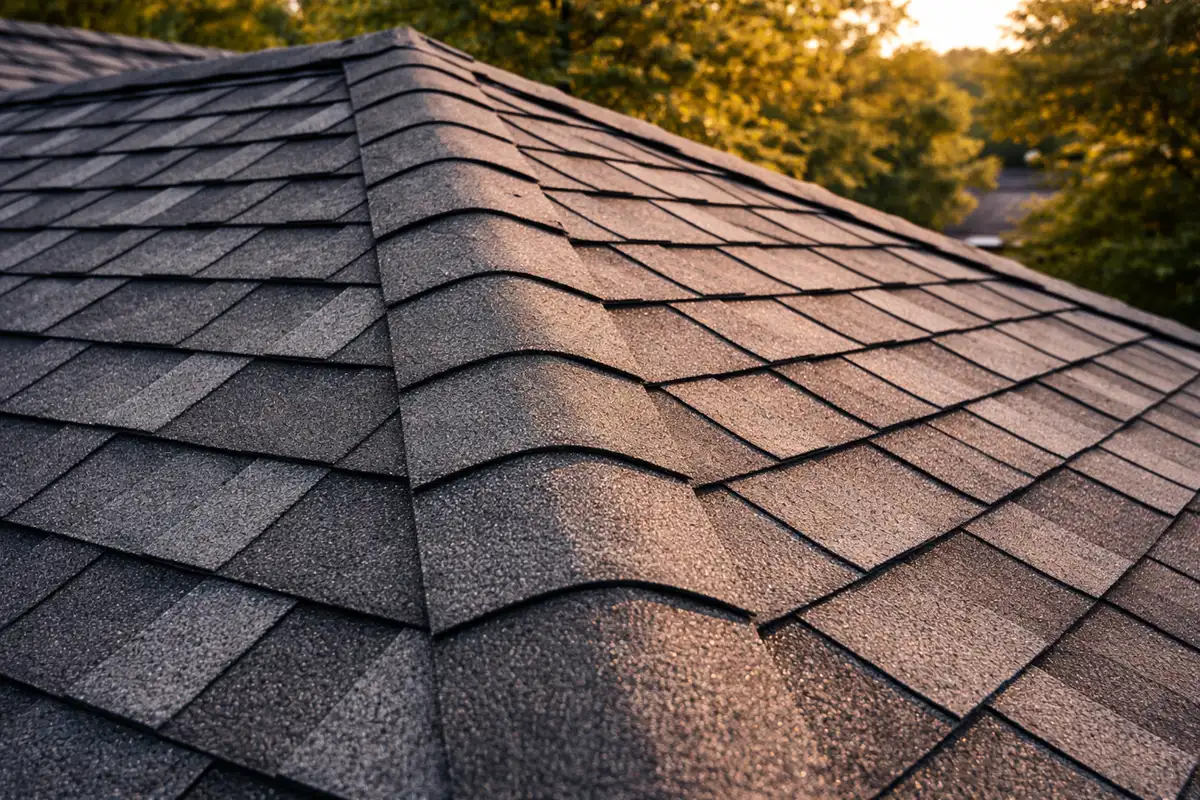
Four roofing replacement options — synthetic shake, architectural shingles, standing seam metal, and stone-coated steel

Synthetic Shake

Engineered composite shakes that replicate the cedar look with 50+ year lifespans and zero maintenance. Class 4 impact-resistant and Class A fire-rated — the premium replacement option.

Architectural Asphalt Shingles

Multi-layered dimensional shingles that provide excellent performance at a lower price point. Class 4 impact-resistant options available for Nebraska's hail exposure.

Metal Roofing

Standing seam or metal shingle systems with 40–70 year lifespans. Maximum hail resistance, energy efficiency, and zero maintenance over the life of the roof.

Stone-Coated Steel

Steel panels with stone granule coating that mimic the profile of natural shake. Combines metal durability with a traditional aesthetic that preserves your home's character.

Our Inspection Process

We follow a thorough 4-step inspection process to evaluate your cedar shake roof and provide honest, documented recommendations.

Professional roofing inspector assessing cedar shake roof condition with moisture probe
Visual Assessment — Complete roof walkover examining every shake for damage, wear, and deterioration patterns
Moisture Testing — Probe testing of suspect areas to identify soft spots and hidden moisture damage beneath the surface
Photo Documentation — Detailed photos of all findings for your records, insurance claims, and repair planning
Written Recommendation — Clear report with repair vs. replacement analysis, cost estimates, and timeline options

Get Your Free Cedar Shake Inspection

Schedule a comprehensive evaluation of your cedar shake roof. We document everything and give you an honest assessment of condition, repair options, and replacement paths.

  • Free detailed condition report
  • Insurance claim documentation
  • Repair vs. replacement analysis
Get Free Inspection

Frequently Asked Questions

Answers to common questions about cedar shake roofing in Omaha

How long do cedar shake roofs last?
With proper maintenance including regular cleaning, treatment, and periodic repairs, cedar shake roofs typically last 20–30 years in the Omaha area. However, many cedar shake roofs in the metro are now approaching or exceeding that age, leading to increasing maintenance needs and repair frequency. During our free inspection, we assess remaining useful life and help you plan accordingly.
Can you repair individual cedar shakes?
Yes, we can repair or replace individual damaged shakes when the surrounding roof structure and underlayment are still in good condition. Isolated repairs make sense when damage is limited to a small area — typically less than 30% of the roof surface. We evaluate each situation during our inspection and recommend the most cost-effective approach.
Is cedar shake more leak-prone as it ages?
Yes. As cedar shake ages, the wood naturally dries, cups, and splits, creating gaps between shakes. Combined with corroding fasteners and degrading underlayment, older cedar shake roofs become progressively more vulnerable to leaks — particularly during wind-driven rain and freeze-thaw cycles common in Nebraska.
What are good replacement options for cedar shake in the Midwest?
The best replacement options for Midwest cedar shake roofs include synthetic shake (50+ year lifespan, zero maintenance, Class 4 impact-resistant), architectural asphalt shingles (cost-effective, Class 4 options available), and metal roofing (40–70 year lifespan, maximum hail resistance). Stone-coated steel is another option that preserves the natural shake aesthetic. We help you compare options based on budget, performance, and appearance during your free consultation.
Will insurance cover storm damage to my cedar shake roof?
In most cases, yes. Homeowners insurance typically covers storm damage to cedar shake roofs, including hail and wind damage. We provide thorough photo documentation and insurance-ready estimates to support your claim. Some older policies may have age-related depreciation clauses, so we recommend reviewing your policy and can help you understand what to expect during the claims process.

Explore More Services

See what else LongView Renovation can do for your home.

Not Sure If Your Shake Roof Needs Repair or Replacement?

Get your free cedar shake roof inspection and honest assessment. Our experienced team documents everything and helps you make the right decision for your home.

Get Free Inspection

Licensed • Insured • Veteran-Owned • Locally Owned • A+ BBB Rating

Roof type availability varies; we confirm all options during inspection.